Let's name the thing nobody says out loud
You can orgasm alone. The moment your partner is in the room, your nervous system goes sideways. Tension builds, focus scatters, and the closer you get, the more you feel like you're failing a test. This isn't dysfunction. It's spectating. Your brain has split into two: one trying to feel pleasure, one watching to see if the pleasure is happening fast enough. That second voice wins every time.
It's one of the most common things I hear in my practice, and it comes with a side of shame that makes it worse. You start thinking you're broken, or your partner thinks you're not attracted to them, or the whole encounter becomes about proving something instead of feeling something. The pressure multiplies.
Lemon clitoral vibrators change this equation completely. Not because they're magic, but because they give you and your partner a shared language that sidesteps the performance trap.
Why presence + pressure is a bad combo for orgasm
Your body has two nervous systems: the parasympathetic (rest and digest, the one that allows arousal) and the sympathetic (fight or flight). When someone is watching, your sympathetic nervous system activates. You're monitoring their face, their breath, whether they're still engaged. That baseline vigilance makes genuine arousal harder to build because your body is partially in survival mode.
Add expectation to that watchfulness and you've created a perfect storm. The more your partner wants you to come, the more you feel the weight of that want. The more you try, the further away orgasm gets. It's the inverse of how pleasure actually works.
Here's the twist: a lemon vibrator introduces a neutral third party. Instead of your partner watching to see if you're coming, they're both watching the tool do its job. The pressure shifts from "Are you aroused enough" to "Is the vibration working." That sounds like a small thing. It's not.
How the dynamic actually shifts with a lemon clitoral vibrator
When you introduce a Lem vibrator into partnered sex, something unintuitive happens: your partner stops being the primary source of your pleasure. They become a witness to your pleasure, which is wildly different. You're not performing for them. You're using a tool that gives you direct, consistent stimulation, and they get to watch that unfold. The pressure deflates.
Three specific things change in the nervous system:
1. Your focus narrows. Instead of monitoring your partner's engagement, your attention is on the vibration and how your body responds to it. That narrowed focus is actually what you need for orgasm to build. You're less in your head.
2. Your partner's role clarifies. They're not responsible for your orgasm anymore. They can touch you, kiss you, talk to you, but the primary work is delegated to the tool. That removes a ton of implicit pressure from the dynamic.
3. Spontaneity returns. Once the expectation is lifted, you might actually come. And if you don't, it's not a failure state. You were both using a tool together. You tried something. That's already a win.
The conversation you need to have first
Don't just pull out a lemon clitoral vibrator mid-session and hope your partner gets it. That invites interpretation. "Does this mean I'm not enough?" "Are you not satisfied with me?" You know the spiral.
Talk about it when you're not intimate. Here's a framework:
"I've noticed that when we're together, I get in my head about whether I'm going to come. It becomes something I'm trying to do instead of something I'm experiencing. I want to try using a vibrator during sex, not because anything is wrong with you or us, but because it might help me relax into it. It's about my nervous system, not your hands or your effort."
That phrasing does two things. It names the real problem (performance anxiety, not desire or attraction), and it positions the vibrator as a tool for you, not a replacement for them. Your partner needs to understand they're still essential. They're just not doing the one thing they might've been pressuring themselves to do.
If your partner resists, listen. Sometimes the resistance is about feeling inadequate. Sometimes it's discomfort with toys. Either way, that conversation is worth having, possibly with a couples therapist if this is a sticking point. If it's just discomfort or unfamiliarity, time and reassurance usually help.
How to actually use it: three setups that work
Setup 1: You take the lead. Your partner is inside you (or pleasuring you manually), and you control the Lem vibrator yourself. This puts you fully in charge of speed, pressure, and timing. Your partner can focus on their own sensation and emotional connection rather than managing your orgasm. Many people find this the easiest entry point because the only thing that's new is the vibrator. Everything else feels familiar.
Setup 2: Your partner holds it. They're giving you stimulation with the vibrator while also being inside you or touching you otherwise. This works well once the initial weirdness wears off. Your partner gets to participate in the tool's use, which some people find hot and which strengthens the sense of togetherness. Communication is essential here. Tell them what speed works, what angle, and whether you need them to stay still or move.
Setup 3: Dual stimulation. You're using the Lem vibrator on yourself while your partner is inside you or penetrating you another way. This is the setup that works best for people who need clitoral stimulation to come but also want penetrative sensation. The vibrator handles one job, your partner handles the other. No part of it falls on anyone's shoulders alone.
Start with whichever setup feels least awkward. You'll probably move between them once you figure out what your body responds to.
The rhythm question: timing and communication
One thing that trips people up is rhythm coordination. If your partner is moving and you're using the vibrator, the temptation is to sync them. You don't have to. In fact, you might find that one slow and one fast feels better. Or alternating pressure. The point is that you get to experiment without the pressure of a synchronized performance.
Set a signal for what you need in the moment. "Slower," "Stay still," "More pressure," "Keep doing that." Make it simple and specific. If you're close to coming, you might not want your partner moving at all. That's not rejection. That's biology. Tell them it helps if they hold still while you use the vibrator, and most partners will understand immediately.
Honestly, the conversation during sex is often where the real intimacy lives. Saying "that feels incredible" or "I need you to stay here while I do this" is how partners actually connect. It's also how you stop performing and start being present.
What to actually buy (and why lemon vibrators are built for this)
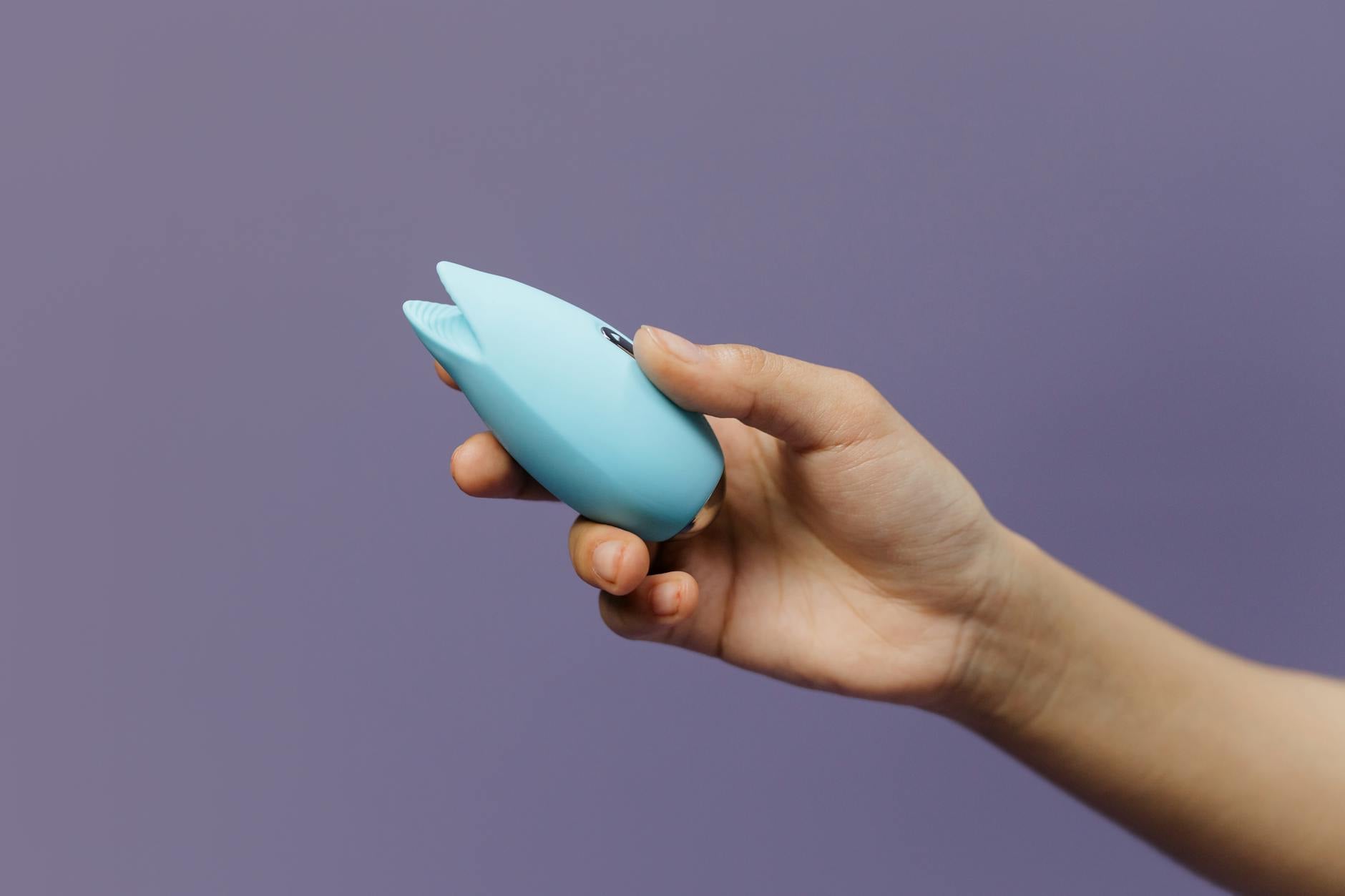
A lemon clitoral vibrator is designed for precision. The Lem vibrator, for instance, uses air-pulse technology rather than traditional vibration, which many people find more natural and less likely to cause numbness with extended use. That matters when you're using it with a partner because you might be at it for longer than solo sessions. The technology is gentle but strong enough to build consistent sensation.
When you're choosing a lemon sexual toy for partnered use, look for:
- Quiet motor. Some vibrators are loud enough to kill the mood. A quieter toy lets you hear your partner, the conversation, the sounds of sex.
- Waterproof. You're adding lubrication (which you should), and fluids happen. A waterproof design makes cleanup easier and means you can use water-based lube without worry.
- Multiple settings. You might want to start subtle and build, or you might want constant intensity. Having options helps you find what your body responds to without negotiating with your partner each time.
- Ergonomic shape. If your partner is holding it, it should be easy to grip. If you're holding it, it should be comfortable in your hand for extended use.
The Lem vibrator hits all of these. That's not product evangelism. It's just the reality of what works for partnered scenarios specifically.
The mental shift that makes this work
Using a vibrator with a partner isn't about replacing them or proving that they're not enough. It's about accepting that your body sometimes needs specific stimulus that hands alone can't provide. That's not a criticism of your partner. It's a fact of your physiology.
Many people come for the first time during partnered sex once they introduce a lemon clitoral vibrator. Not because the vibrator is magic, but because it removes the layer of performance anxiety that was blocking everything else. You can finally relax. And when you relax, your body can do what it was designed to do.
This shift also tends to improve partnered sex overall. Once you've had one good experience, the shame diminishes. You've proven to yourself that you can come with a partner present. That confidence changes how you approach the next encounter. The pressure stays lower. The pleasure stays higher.
Common worries and what actually happens
"My partner will feel less needed." Most partners feel more connected once the performance pressure is off them. Ask them. They'll probably say they were worried about failing you. Removing that fear deepens intimacy.
"It'll feel clinical or interrupting the moment." The first time feels a bit weird. By the third or fourth time, it's just part of your together. Natural. Intimate, even.
"I'll lose the ability to come without it." You won't. If anything, having one good experience can rewire how you approach partnered sex generally. That confidence doesn't disappear when the toy does.
"They'll want to use it and I'll feel uncomfortable." That's a consent conversation. You can set whatever boundaries you need. "I want to use it on myself" or "I want you to control it this time" or "Not tonight" are all valid.
When to consider talking to someone
If you've tried this a few times and still can't relax, or if the performance anxiety is happening in solo sessions too, that's worth exploring with a sex therapist or relationship counselor. Sometimes the block isn't about your partner or your body. Sometimes it's about internalized messages about what sex should look like or feel like. A professional can help you untangle that.
But in most cases, the simple act of introducing a tool that removes the pressure is enough. Your nervous system settles. Your body remembers what pleasure feels like. And partnered sex becomes something you're excited about instead of something you're managing.
People also ask
Why can I orgasm alone but not with a partner?
When you're alone, there's no audience. Your brain isn't monitoring whether you're performing correctly or whether someone else is satisfied. That absence of surveillance allows your parasympathetic nervous system to activate, which is where arousal lives. Add a partner and your sympathetic nervous system kicks in (the vigilance system), which suppresses arousal. It's not willpower. It's neurology.
Does using a vibrator during sex mean my partner isn't satisfying me?
No. Your partner might be doing everything right, and your nervous system might still struggle with the specific stimulus of hands or penetration alone. Needing a vibrator isn't a comment on your partner's adequacy. It's information about what your body needs to relax enough to orgasm in a partnered context. Most people find the opposite is true once they introduce tools: partnered sex becomes more connected and intimate, not less.
How do I choose between the Lem vibrator and other lemon clitoral vibrators?
Look at the motor design (air-pulse versus traditional vibration), noise level, battery life, and whether it's ergonomic for your hand. The Lem vibrator is designed with partnered use in mind, so the shape works well whether you or your partner is holding it. Read reviews from people describing partnered scenarios, not just solo use. That context matters.
What if my partner thinks the vibrator is a threat?
Have the conversation directly. Name his specific fear: "Are you worried I won't want you anymore?" "Do you feel like you're being replaced?" Then address it. "I want to come with you. This tool helps me relax so I can. I still want your hands, your mouth, your body inside me. The vibrator is an addition, not a replacement." If that doesn't land, consider a session with a couples therapist to talk through it.
Can I use a lemon sexual toy if my partner doesn't like penetration or I don't want it that night?
Absolutely. You can use a vibrator during foreplay, during oral sex, or as your entire sexual encounter. The tool works standalone or in combination with other types of contact. Some people use a lemon vibrator during partnered oral sex. Others use it while kissing and touching. It's flexible.
How do I bring this up without hurting my partner's feelings?
Don't frame it as a problem with him. Frame it as a solution for your nervous system. "I want to try something that might help me relax more" is different from "You're not making me come." One is collaborative. One is critical. Stay in the collaborative space. Offer to do research together, let him hold the toy, involve him in choosing which lemon vibrator to try. Partnership matters more than the tool.
The payoff
Most people don't realize how much energy they're using to monitor whether they're coming until they stop doing it. The relief is immediate. Your body relaxes. Your pleasure builds. And your partner gets to witness that instead of manage it. That's connection. That's intimacy. That's what partnered sex is supposed to feel like.
Start with the conversation. Pick a lemon clitoral vibrator that feels right for your body and your hand. Choose a setup that feels least vulnerable. And then let yourself actually enjoy it. You deserve that.