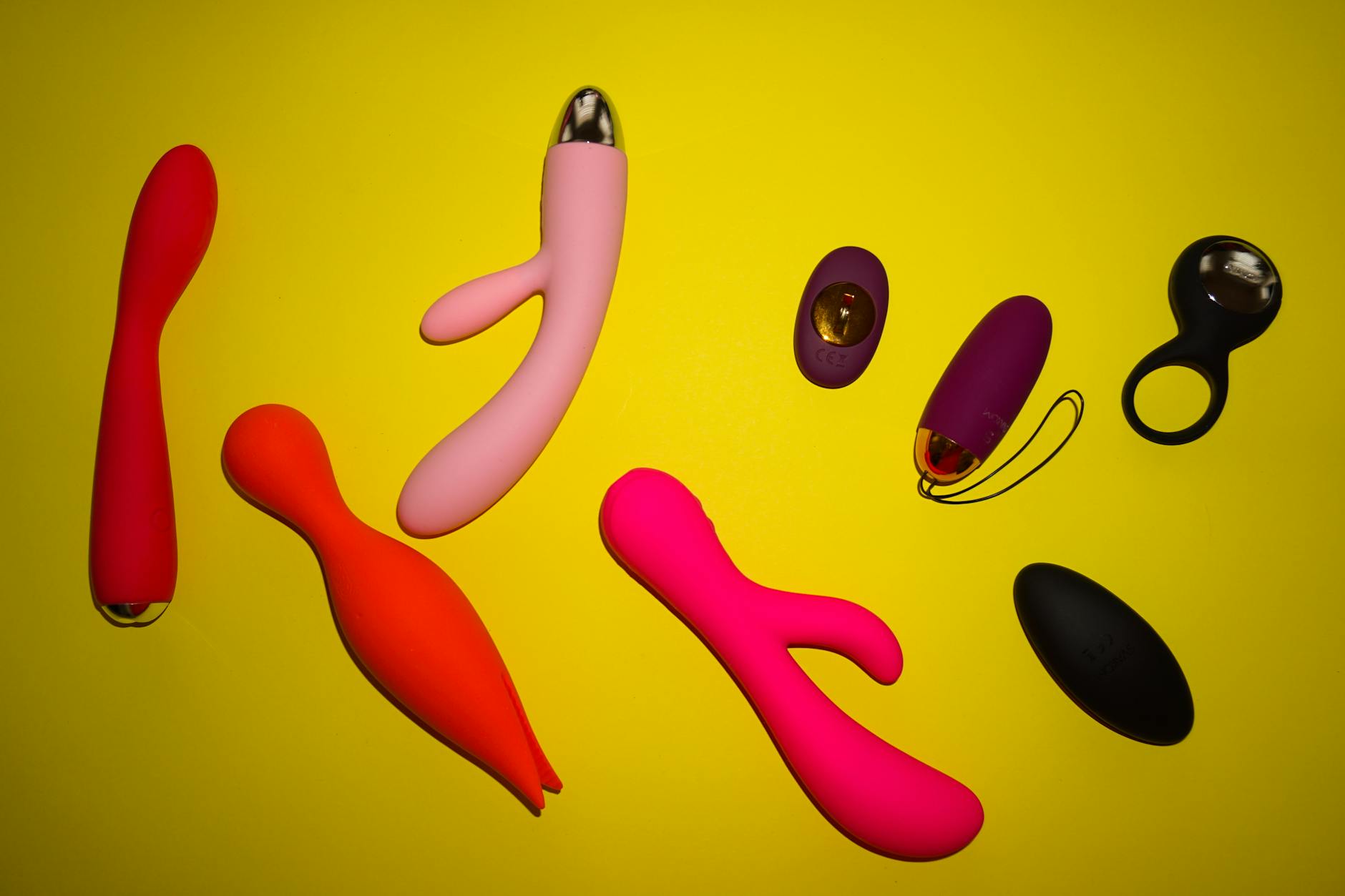
The thing nobody talks about: oversensitivity is real
Let's be real. You bought a clitoral vibrator because you wanted to feel more, not less. Then it arrived, you turned it on, and your entire nervous system said no.
Overstimulation during sex is not about being broken or frigid. Your clitoris has thousands of nerve endings packed into a tiny area. Sometimes those nerves are hypersensitive because of hormones, medication, stress, past trauma, or just the way your particular body is wired. A lemon vibrator can feel like a jackhammer instead of a tool. That's not a flaw. That's data.
The good news: lemon clitoral vibrators are actually designed in a way that makes this fixable. Unlike traditional bullet vibrators that blast straight-on intensity, the way a Lem vibrator works with suction and pulsing patterns gives you way more control. You don't have to white-knuckle your way through it or abandon pleasure altogether.
Why some bodies experience overstimulation
Three main culprits:
Hormonal shifts. Estrogen and progesterone fluctuate throughout your cycle. During certain phases, your clitoris becomes noticeably more sensitive. If you're on hormonal birth control, antidepressants, or navigating menopause, tissue sensitivity can swing wildly. A vibrator that felt perfect last month might feel like too much this month.
Nerve sensitization from repetition. Your nervous system adapts to stimulation patterns. If you've been using the same vibrator the same way for years, your body might crave novelty or, paradoxically, need a complete break to reset sensitivity thresholds. Overstimulation sometimes means your nerves are tired, not that you're broken.
Psychological overlay. Anxiety, body image concerns, or past sexual stress can wire your nervous system into high alert. Your clitoris tenses up. Blood flow concentrates. Touch that should feel good registers as threatening. This is why some people find that lemon vibrators help more than other tools. The sensation pattern feels less aggressive.
How lemon vibrators differ from other clitoral toys
Most vibrators work via direct vibration against tissue. The Lem uses a gentler suction-and-pulse method. Instead of thousands of vibrations per second hammering the same spot, suction creates a wave-like stimulation that spreads sensation across a wider area.
This design matters if you're dealing with oversensitivity. The diffused sensation means you're not concentrating all the intensity into a single hypersensitive point. You're also not fighting the vibration directly. You're working with your body's natural response.
That said, even a lemon vibrator can feel too strong if you don't use it correctly. Here's how to adjust.
Starting with the lowest patterns
The Lem has multiple intensity levels and patterns. Most people skip straight to level 4 or 5 because they assume that's where pleasure lives. Wrong assumption.
Start at pattern 1, level 1. Yes, it feels quiet. Boring, even. That's the point. Spend 10 full minutes at this setting. Your nervous system needs to acclimatize. Your clitoris needs permission to relax. If you jump straight to high intensity, you're essentially screaming at tissue that's already on guard.
Pattern 1 is usually a steady pulse. It mimics the way blood naturally pools during arousal. Some people find that staying here, without escalating, actually builds longer, deeper orgasms than leaping to the fastest setting.
If after 10 minutes, pattern 1 still feels too strong, use the toy over your underwear or through a thin layer of fabric. This dampens sensation without removing it. Fabric acts as a buffer while your nervous system decides this is safe.
Rotating between patterns instead of cranking intensity
When you do feel ready to shift, move sideways, not up.
Lem vibrators offer several patterns beyond straight vibration. Pulsing patterns, for instance, give your clitoris micro-breaks between stimulation. These breaks are crucial if you're oversensitive. Your nerve endings get a moment to reset between waves. This often feels more pleasurable than continuous buzzing, especially if overstimulation is your pattern.
Instead of going from pattern 1 level 1 to pattern 1 level 5, try pattern 1 level 1, then switch to pattern 2 (a different pulse rhythm). The novelty resets your adaptation and often feels more interesting than simply turning up the volume.
Rotate through three patterns at low levels before ever touching the intensity dial.
Positioning and angle matter more than you think
Direct contact with the clitoral glans is often where oversensitivity peaks. The tip of your clitoris has the highest nerve density. Some people can't tolerate direct contact at all.
With a lemon vibrator, you have options. Position it slightly off to the side of the clitoris rather than directly on it. Or angle it so the suction cup sits over the whole vulval area, which distributes sensation more widely. You're still getting clitoral stimulation, but through a gentler, broader pathway.
Try different contact points. Some people find that stimulating the clitoral hood (the tissue covering the clitoris) rather than the glans itself gives them the pleasure they want without the overwhelm. Experiment with angle and pressure during one session, then nail down what worked and stick with it next time.
Lubrication is not optional when oversensitivity is the issue
Dry tissue amplifies sensation. Wet tissue diffuses it.
Even if you're naturally lubricated, add a water-based lube on top. Not because something is wrong, but because lube creates a buffer layer. It reduces friction. It makes the suction feeling smoother and less jarring. Many people with oversensitivity report that adding lube transforms an unbearable experience into one they actually enjoy.
Apply lube to the toy, to your external vulva, or both. Reapply halfway through if things start to dry up. This is not a sign of failure. It's a practical adjustment.
The mental reset: separating overstimulation from shame
Here's what I tell my clients: your body is not defective because it finds a clitoral vibrator overwhelming. Your body is communicating a need.
Many people internalize oversensitivity as a personal failing, especially if partners have found the same sensation pleasurable or if you've spent years thinking you "should" be able to handle this. That narrative doesn't help. It just adds anxiety on top of an already-sensitive nervous system.
If lemon vibrators feel too intense, that's information, not judgment. Some people need gentler tools. Some need longer warm-up time. Some need to use toys only during specific phases of their cycle. Some find that working with a therapist to address underlying trauma or anxiety around touch opens up an entirely different relationship with sensation.
Respecting your body's feedback is what builds actual pleasure, not powering through discomfort.
When to take a break completely
If you've tried the low settings, multiple patterns, repositioning, and lube, and sensation still feels aggressive, step back.
Your nervous system might need a reset. This is especially true if you've been using vibrators frequently or intensely. Take a week off. Go back to hands-only touch or nothing at all. Let your nerve endings' sensitivity threshold recalibrate without external stimulation.
Then, after that break, approach a lemon vibrator again as if it's brand new. Often, that pause changes everything. Your body has had time to forget the overwhelm and remember what gentle feels like.
That said, if oversensitivity persists even after breaks and careful use, talk to a healthcare provider. Conditions like vulvodynia or dermatological changes can make clitoral touch painful rather than pleasurable. A gynecologist trained in these areas can rule out physical causes and suggest treatment options.
FAQ: oversensitivity and lemon vibrators
Can I use a lemon vibrator if my clitoris is always sensitive?
Yes, but you'll need to honor your body's setup. Start at the absolute lowest setting, use patterns instead of raw intensity, position the toy slightly off-center rather than directly on the glans, and don't skip lubrication. Some people with chronic oversensitivity find that lemon vibrators actually work better than other toys because the suction mechanism is less jarring than direct vibration. Others find they do better with hands-only touch or toys designed for external massage rather than penetration or direct clitoral work.
Does oversensitivity mean I'll never orgasm with a vibrator?
Absolutely not. It means you need a specific approach. Many people with oversensitive clitorises report their most intense orgasms come from using clitoral vibrators at low levels with longer warm-up time. Your pleasure pathway might just be less steep and more gradual than someone else's. That often produces deeper, more full-body orgasms, not weaker ones.
Will my sensitivity settle down if I keep using a vibrator despite the overwhelm?
No. Powering through overstimulation teaches your nervous system that sensation is threatening. You'll likely become more defensive, not less. Back off, dial down intensity, and move at your own pace. Your nervous system will relax faster when you're not fighting it.
Is there a difference between pain and intense sensation during vibrator use?
Yes, and it matters. Intense sensation feels like too much but is still within the pleasure spectrum. Pain feels harmful. If a lemon vibrator causes sharp, burning, or shooting pain rather than tingling overwhelm, stop immediately and check with a healthcare provider. That's beyond normal oversensitivity and suggests something else is happening.
Can hormonal changes really affect how a vibrator feels?
Completely. During the luteal phase of your cycle, progesterone rises and clitoral sensitivity often increases. Some people find that a vibrator they loved in the follicular phase feels unbearable during this window. Track when oversensitivity peaks. You might find it follows a predictable pattern tied to your cycle. If so, adjust your vibrator practice accordingly. Use lower settings during high-sensitivity weeks.
If a lemon vibrator feels too intense, should I try a different toy instead?
Not necessarily. Before switching toys, try the adjustments listed here. Different patterns, lower intensity, repositioning, lubrication, and longer warm-up often resolve overwhelm without needing to buy something new. That said, some people discover they do better with a vibrator designed for external massage or a wand toy rather than a suction-style toy. Everyone's nervous system is different. It's worth experimenting, but start with optimizing the tool you have before investing in another.
The takeaway: overwhelming sensation is solvable
Being sensitive to clitoral vibrators is not rare, and it's not something you have to accept as your ceiling. A lemon vibrator, used thoughtfully at low settings with different patterns and proper positioning, often becomes exactly the tool that works. Your pleasure is worth the small adjustments it takes to get there.
If you're struggling with this, reach out. We're here to help figure out what actually works for your body.