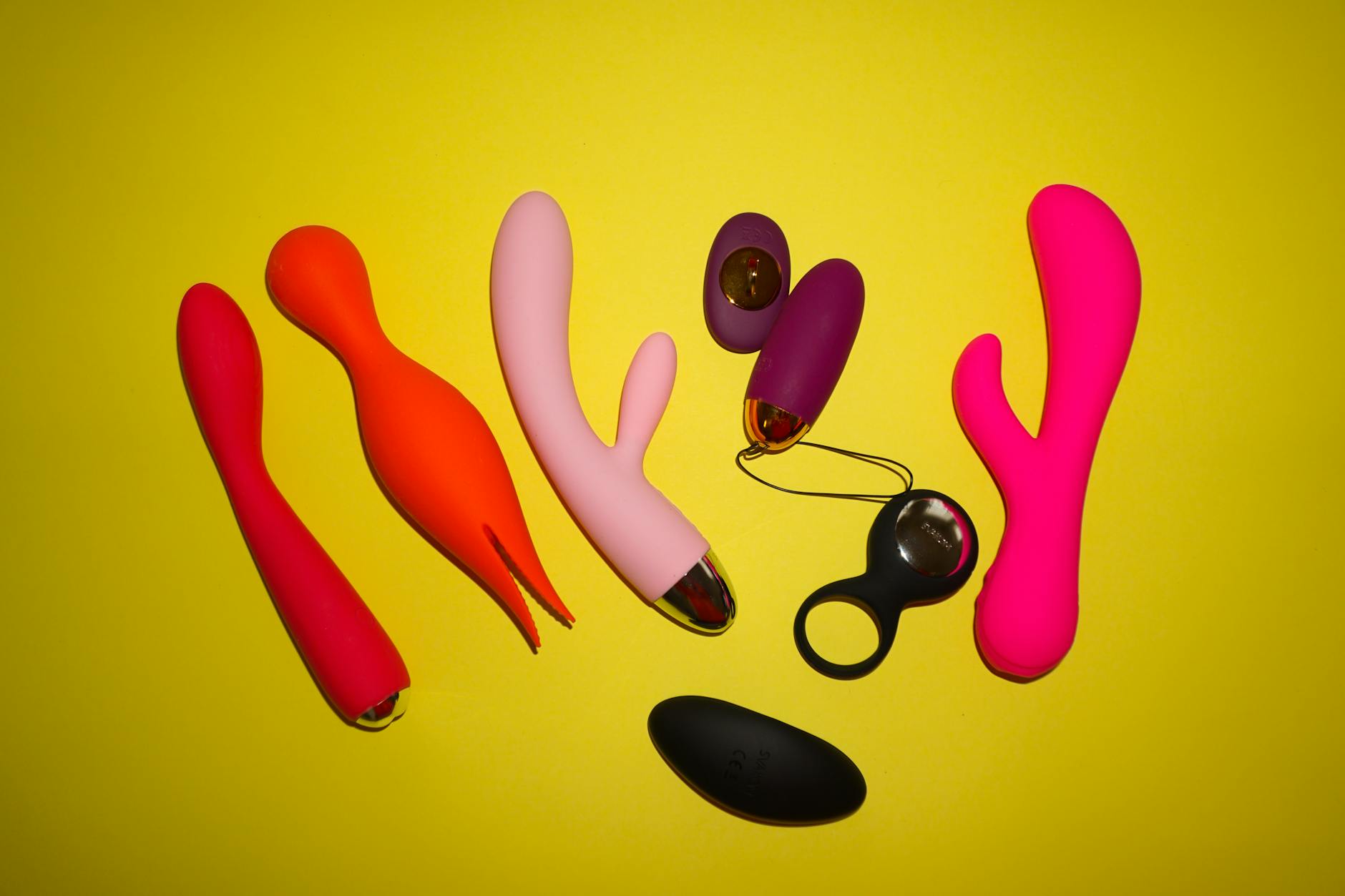
Let's be real about stress and sex
Prolonged stress doesn't just kill your mood. It rewires your nervous system. Your body goes into survival mode, which means blood flow redirects away from pleasure zones and toward your muscles and brain. Cortisol floods your system. Your pelvic floor tightens. Touch feels either too intense or completely numb. Then, when the crisis passes and your partner wants to reconnect, you're left staring at someone you love and feeling absolutely nothing. That's not a relationship problem. That's a physiological one, and it's fixable.
I've worked with couples coming out of major stress—job loss, illness, caregiving, financial crisis, pandemic isolation. The pattern is always the same: the external pressure lifts, and suddenly the intimate pressure appears. "We should reconnect," they say. "We haven't touched in months." And then nothing happens, because your body hasn't actually recovered yet. It needs permission, time, and the right tools. Lemon vibrators, specifically the clitoral suction-style devices, are one of the most effective bridges back.
Why stress breaks the pleasure pathway
When you're under sustained stress, your sympathetic nervous system (the fight-or-flight one) stays activated. This is useful for handling a crisis. It's terrible for sex. Here's what happens physically.
Your brain prioritizes survival signals over pleasure signals. Dopamine and serotonin tank. Your vaginal tissue receives less blood flow, so lubrication becomes harder to trigger. Your pelvic floor muscles clench unconsciously—they're literally braced for impact, even when there's no threat. Genital sensation dulls because your brain is filtering out signals that don't feel immediately necessary. And psychologically, intimacy starts to feel like one more obligation, not a source of connection.
The result: you and your partner finally have a free evening, the kids are asleep, and you feel like your body belongs to someone else. That's not lack of love. That's dysregulation.
The restart protocol: three phases
You can't jump from chronic stress directly back into partnered sex. Your nervous system needs a graduated approach.
Phase 1: Solo recovery (weeks 1-2). Your body needs to rediscover pleasure without the pressure of performance or someone else's timeline. This is where lemon clitoral vibrators are essential. Air-suction devices like the Lem work because they don't require the same mental focus as traditional vibration. You don't have to "think" your way into arousal. The suction pattern does a lot of the work, which means your brain can finally relax. Spend 15-20 minutes alone with your vibrator, no agenda, no expectation of orgasm. The goal is to reactivate the pleasure nerve pathways, not to achieve anything.
Phase 2: Reintroduction with your partner present (weeks 2-4). Once you've felt pleasure solo a few times, the next step is letting your partner see it. Not having sex yet. Just being intimate in the room while you use your vibrator. This does two things: it shows your partner what actually turns you on (which you may not even know after months without desire), and it gives your nervous system a chance to learn that pleasure is safe even with someone else nearby. Many couples find this phase transforms everything because it removes the pressure to perform and makes space for genuine connection.
Phase 3: Partnered pleasure (weeks 4+). Now your body has remembered what pleasure feels like, and your partner has been invited into that experience. Sex becomes less about "getting back to normal" and more about exploring what you both want now. You might use the lem vibrator together, or you might not. The point is that your nervous system has been gently rewired to associate intimacy with safety and pleasure again.
Why lemon clitoral vibrators work best for stress recovery
There are a lot of vibrator options. Lemon vibrators, especially the suction-style lem, have specific advantages for someone coming out of prolonged stress.
First, suction feels different from traditional vibration. It's broader, less localized, and less likely to overstimulate sensitive tissue that's already been through the wringer. If your nervous system is in recovery mode, intense vibration can actually feel chaotic. Suction feels more grounding.
Second, air-suction devices don't require as much mental effort to activate pleasure. You press the button, the sensation starts, and your body can follow. Traditional vibrators sometimes require you to "find the right angle" or "focus on the right sensation," which means your brain is working. When you're recovering from stress, you need your brain to stop working.
Third, lemon vibrators are compact and intuitive. They don't have seventeen settings or require you to read an instruction manual. You pick it up, turn it on, and go. Simplicity matters when your nervous system is in recovery mode.
Setting the environment for genuine reconnection
Tools matter, but so does space. When you're restarting intimacy after stress, the environment signals to your nervous system whether it's actually safe to relax.
Start small. Not candles and mood lighting if that feels performative. Maybe just a clean bed, your phone on silent, 20 minutes with no interruptions. Your partner knowing they don't need to do anything except be present. The pressure to perform, to look a certain way, to move a certain way—all of that needs to lift before your nervous system will let pleasure back in.
If you're with a partner, talk beforehand. Not during. Before. "I want to explore this on my own first. Then I'd like you in the room while I do. That's not an invitation yet, just an invitation to witness." Clear communication is foreplay when trust has been strained by stress.
The emotional piece (it's as important as the physical one)
Stress doesn't just affect your body. It affects how you relate to your partner and to pleasure itself. After months of feeling touched out, overwhelmed, or numb, intimacy can feel like a demand, not a gift. Rebuilding that takes more than a lemon clitoral vibrator.
When you restart, you're not just restarting sex. You're rebuilding the belief that pleasure is for you, that your body is yours, and that intimacy with your partner is safe again. That's psychological work as much as physical work. Some couples benefit from checking in with a therapist or counselor during this phase, especially if stress was severe or if the relationship itself was strained.
But here's what I know from years of working with couples: the couples who make it through stress and come out with stronger intimacy are the ones who approach reconnection with patience and curiosity, not pressure. The lemon vibrator is the tool. The real work is deciding together that pleasure matters and that you're both worth the time it takes to rebuild.
Common mistakes to avoid
Don't jump straight to partnered sex because you feel like you "should." Pressure is the enemy of nervous system recovery.
Don't apologize for needing time. "I'm sorry my body isn't responding yet" is something I hear constantly from people restarting after stress. You're not broken. You're recovering. That's completely different.
Don't assume your partner should know what you need. If you need more time with your vibrator before partnered touch, say that. If you need to feel less responsible for their pleasure first, say that. Stress breeds resentment when couples don't communicate what they actually need.
Don't expect it to feel the same as before. It won't. And that's okay. How to Use Lemon Vibrators When You Feel Disconnected in a Long-Term Relationship explores this in more depth, but the short version is: stress changes you. Your body, your desires, your capacity—all of it shifts. The goal isn't to recreate what was. It's to discover what is now.
When to know it's working
You'll know your nervous system is genuinely recovering when:
You feel anticipation instead of dread about time alone with your vibrator. When you start thinking about it before bed, not because you're obligated to but because some part of you actually wants to. That's your pleasure pathway waking up.
Your partner can be in the room and you don't feel self-conscious. At first, yes, you probably will. But after a few times, if it's working, you'll stop performing and start actually feeling. That's the nervous system learning safety.
Sex becomes something you want instead of something you should do. Not always—life gets busy. But you feel genuine desire again, even if it's quieter than before. That's the baseline signal that you're out of recovery mode.
FAQ: Stress, desire, and lemon vibrators
How long does it usually take to feel pleasure again after prolonged stress?
Every person's nervous system has its own timeline, but most people start feeling genuine sensation return within two to three weeks of solo practice with a lemon clitoral vibrator. Full nervous system recovery—where desire comes back without conscious effort—typically takes six to twelve weeks. This isn't linear. You'll have good days and setback days. That's normal.
Can I use the lem vibrator with a partner right away, or should I use it solo first?
Solo first, almost always. Your nervous system needs to remember that pleasure is safe before adding the variable of someone else's presence. Once you've felt genuine sensation solo a few times, introducing your partner into that space makes the transition smoother. How to Use Lemon Vibrators When Your Partner's Attention Wanes Mid-Session covers partnered use in more depth.
What if my partner feels rejected when I want to use the vibrator alone first?
This is real and worth addressing directly. A conversation beforehand helps: "This isn't about you. It's about me needing to feel safe in my own body again. I want to reconnect with you, and using this solo is how I rebuild trust with myself." Most partners who understand that this is about nervous system recovery, not about them, become supportive. If your partner insists on sex before you're ready, that's a different problem—one worth exploring with a therapist.
Is it normal to feel nothing even with a lemon vibrator at first?
Completely normal. After prolonged stress, your nervous system may be so dysregulated that even pleasurable stimulation feels muted at first. This is called anhedonia—the inability to feel pleasure. It's temporary, but it requires patience. Keep using the vibrator consistently (daily or every other day) and sensation will gradually return. If it doesn't improve after four weeks, it's worth talking to a doctor, as depression or hormonal changes can extend recovery time.
Can stress cause permanent changes to sexual response?
Not permanent, but stress can create lasting patterns. For example, if you've been touched out for months, your brain may develop an association between touch and overwhelm. This is rewirable, but it takes intentional practice. This is why the graduated approach—solo first, then partnered—works so well. You're consciously rewriting the association.
What if my stress is ongoing, not resolved?
If the stressor is still active (ongoing caregiving, financial crisis, unstable living situation), rebuilding intimacy is harder because your nervous system is still in survival mode. Addressing the external stress first makes sense before investing heavily in solo pleasure practice. That said, sometimes pleasure becomes part of nervous system regulation during ongoing stress—a way to remind your body it's still yours. Talk to your partner and possibly a therapist about what approach makes sense for your situation.
The patience part is everything
I work with a lot of couples who've weathered major stress together, and the ones who rebuild intimacy successfully have one thing in common: they stopped treating reconnection like a project with a deadline. They treated it like what it is—a gradual, nonlinear process of learning to trust their own bodies and each other again.
A lemon clitoral vibrator is a tool. It's a very good tool for reactivating sensation and breaking the cycle of stress-induced numbness. But the real work is the decision to be patient with yourself, to prioritize pleasure as part of recovery, and to move at your own nervous system's pace. Stress took something from you. It took time to get there. It takes time to come back.
If you're navigating this transition and feeling stuck, reach out. Sometimes talking through what's blocking you helps more than any device ever could.